
In 2023, the Town of Salisbury’s Land Use Office conducted a pilot program in support of a long-term project to assess vernal pools in our town. This project is a proactive approach to identifying and ranking the ecological significance of vernal pools using criteria that consider the condition of the surrounding landscape, the productivity of the pool, and which species are present.
What is a Vernal Pool?
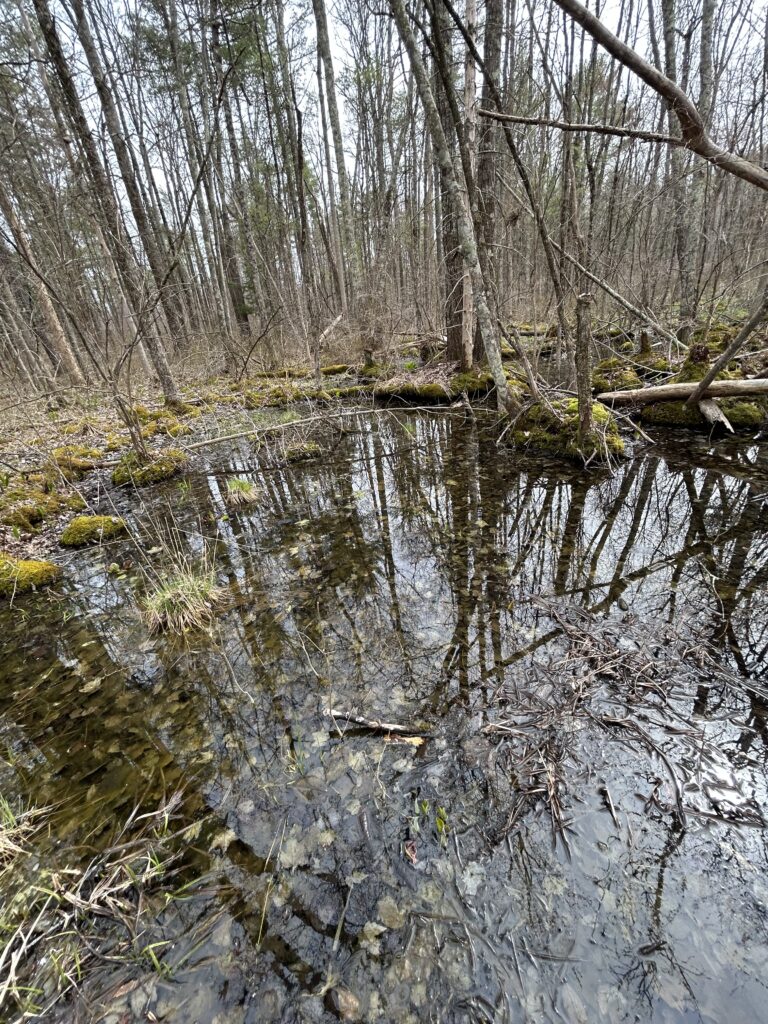
Vernal pools are seasonal wetland habitats that serve as breeding areas for specialized species of frogs and salamanders. Often overlooked because of their small size and ephemeral nature, vernal pools are critically important natural resources. Vernal pools can be either standalone small wetlands lying in depressions, or deeper areas within swamps and marshes. Both types of pools are defined by the presence of certain amphibians that depend upon them for reproduction (often called indicator species). Vernal pools also serve a variety of wetland functions, including groundwater recharge, denitrification, and pollutant removal. Organisms produced within vernal pools serve as part of the base of the food chain upon which all life depends.
How does this Study Work?
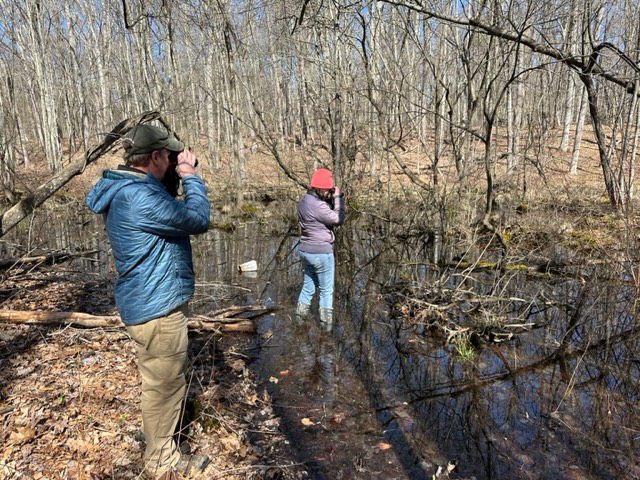
Because of the seasonal nature of these wetlands, assessments take place in the early-mid spring, when most species of vernal pool frogs and salamanders gather to breed. Assessments generally take place in March and April, dependent upon prevailing weather conditions. With the irregular rainfall and temperature patterns accompanying climate change, amphibian activity varies from year to year. Supervised by the Land Use Office, the biological data are collected by volunteer citizen scientists in the field. Following field investigations, vernal pools will be mapped and the integrity of the surrounding landscape will be evaluated using GIS and field notes to categorize the pools.
Vernal Pool Indicator Species
These Connecticut native species are some of the species that depend on vernal pools for successful reproduction. Therefore, their presence can be indicative that the body of water they’re found in is a vernal pool. For the purposes of the field investigations, the amphibians are also identified by their egg masses.
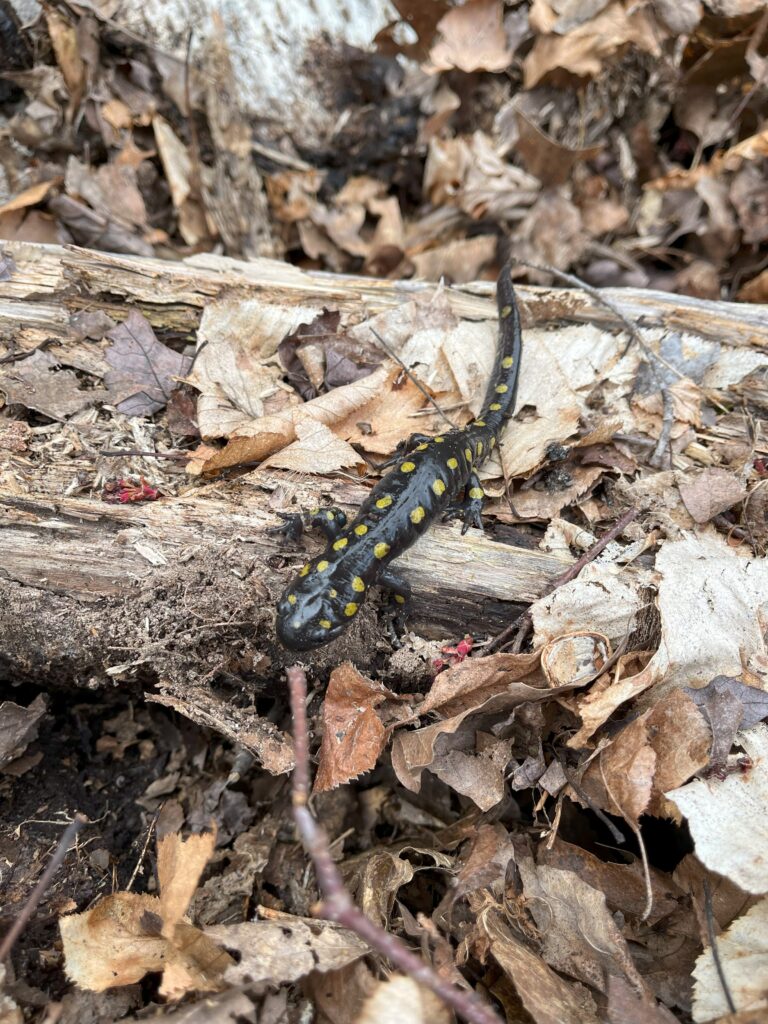
Spotted Salamander
(Ambystoma maculatum)
The largest mole salamander (Ambystoma species) found in Connecticut. They are terrestrial as adults, but migrate to vernal pools each spring to breed.
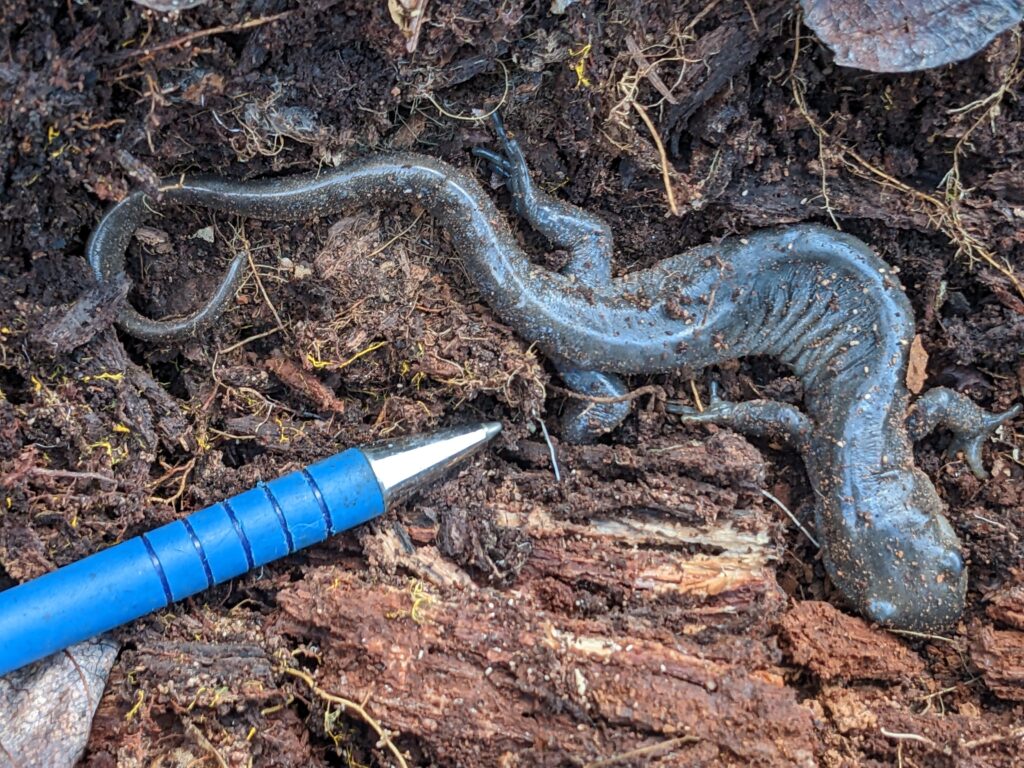
Jefferson Salamander
(Ambystoma jeffersonianum)
A large mole salamander documented in CT as occurring only within populations hybridized with the blue-spotted salamander (Ambystoma laterale). This is a State Species of Special Concern.
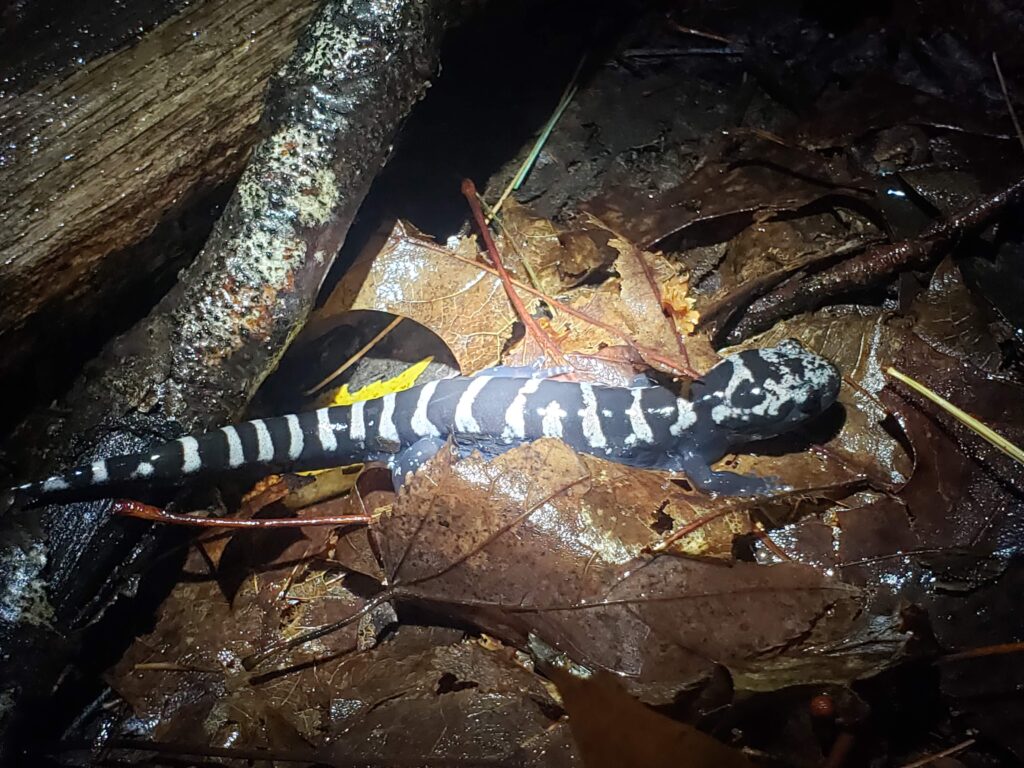
Marbled Salamander (Ambystoma opacum)
Unlike the other Abystoma species in Connecticut, Marbled Salamanders breed in the fall. They are localized and uncommon at higher elevations, being most abundant in the lower-lying areas of the state.
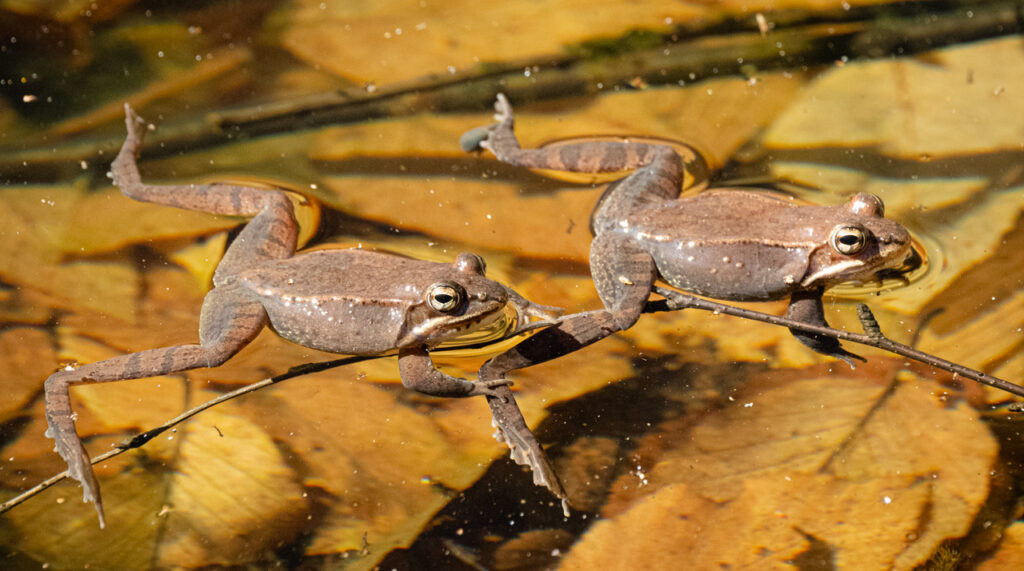
Wood Frog
(Lithobates sylvaticus)
These frogs can be found in terrestrial forested habitats throughout New England, but breed primarily in vernal pools.
Photo: Tom Blagden, 2023
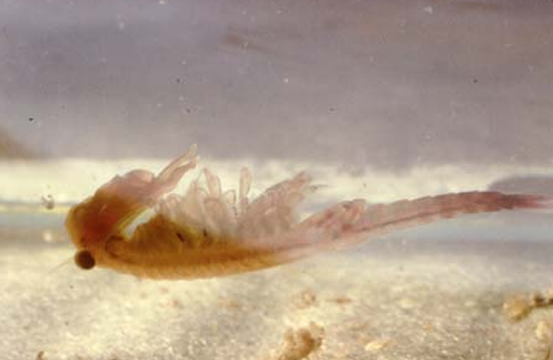
Fairy Shrimp (Anostraca spp.)
These small aquatic invertebrates are found exclusively in vernal pools. Their populations survive the periodic drying through drought-resistant eggs.
Photo: Leo P. Kenney
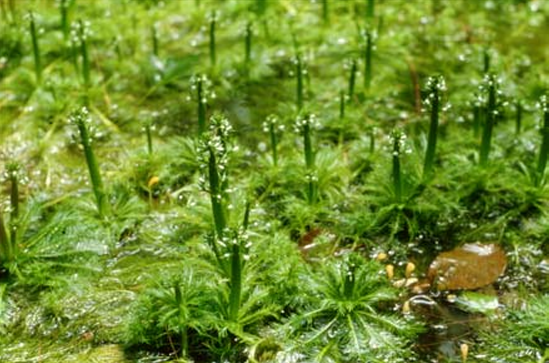
Featherfoil (Huttonia inflata)
Featherfoil is unique aquatic wildflower that appears to float on the water surface. It is a member of the primrose family (Primulaceae).
Photo: Maine Natural Areas Program
Is There a Vernal Pool on Your Property?
Let us know! Contact the Land Use Office with information on your suspected vernal pool or any questions you have. This ambitious project can only be accomplished with public interest and support. Vernal pools and their surrounding forests are critical habitats we need your help protecting.